















Buying a cooktop for your kitchen is not a straightforward as you may think. Sure, most cooktops will do the job of boiling, searing, and simmering. However, there are plenty of other considerations such as fuel types, smart functions, safety features, and so much more that can make your next cooktop the best decision you’ve ever made – if you know what to look for.
At Appliance Palace, we want you to be certain that the appliance you choose will live up to your expectations before you buy it. So we’ve picked our experts’ brains to learn everything our customers should know about cooktops before browsing our vast inventory of high-quality appliances. That way, you’ll be able to quickly and efficiently narrow down your search to the features and functions you need – or didn’t know that you needed.
Before You Buy
The last thing you want on delivery day is to find out you can’t use your new cooktop. Let’s go through some basic housekeeping tips to determine which models are compatible with both your preferences and your installation space.
- For Cooktops: Take the height, width, and depth measurements of the cutout where you want your cooktop to go. A good standard to go by for width is an additional 1/6” on each side and in front for easy slide in of your new unit as well as minor cabinet shifts. Add ½-1” extra depth behind the unit for power cord clearance and gas hookups. For height, add 1-1½” for leveling screws and any insulation.
- For Rangetops: Rangetops, which overhang the countertop, follow the same basic measurements as standard cooktops with some additional considerations. Ensure your countertop can support up to 200 lbs. without cracking, as rangetops are much bulkier. Rangetops can extend 3-4” below 24” base cabinets, so you must have adequate oven or cabinet clearance beneath it. Gas models should have 2-3” behind the unit for shut-off valves and any supply lines, while 1½” should be sufficient for conduits on electric units.
Configuration Types
Configuration refers to a combination of the installation type and design style of your cooktop. When deciding on a configuration, it is important to first consider how you intend to use your cooktop and your preferred integration style. Let’s go through the basics of each to narrow down your selection.
Built-In Cooktops
Built-in cooktops (or drop-in cooktops) are the standard cooktop design – a cutout is made in the top of your counter space and the cooktop is placed inside. All controls are located on top of the unit, preserving the front of your counters and maintaining a low-profile, integrated style. This configuration preserves cabinet space below and, in some cases, can be paired with a compatible wall oven from the same brand for a full cooking suite concentrated in one section of your kitchen.
Rangetops
Rangetops are luxury-style cooktops with professional-grade cooking performance that dramatically differ in appearance from standard units. Rangetops have a bullnose with front controls that extends past your countertops. They also extend lower into your cabinetry since they are equipped with hardware that enables high heat capabilities comparable to pro-style ranges. Rangetops were once exclusively gas-powered, but modern manufacturing capabilities have resulted in a growing selection of electric and induction rangetops across multiple brands.
Portable Cooktops
Portable cooktops are freestanding modules with one or two electric elements that rest anywhere on your countertops as long as they are within range of an electrical outlet. Not only do they conserve counter space, but they can also be stored away when not in use.
Fuel Types
When deciding on a primary fuel type for your cooktop, it is important to consider more than just their power. Each one comes with its own specific strengths and tradeoffs that make them suitable to different lifestyles and cooking preferences.
Gas Cooktops
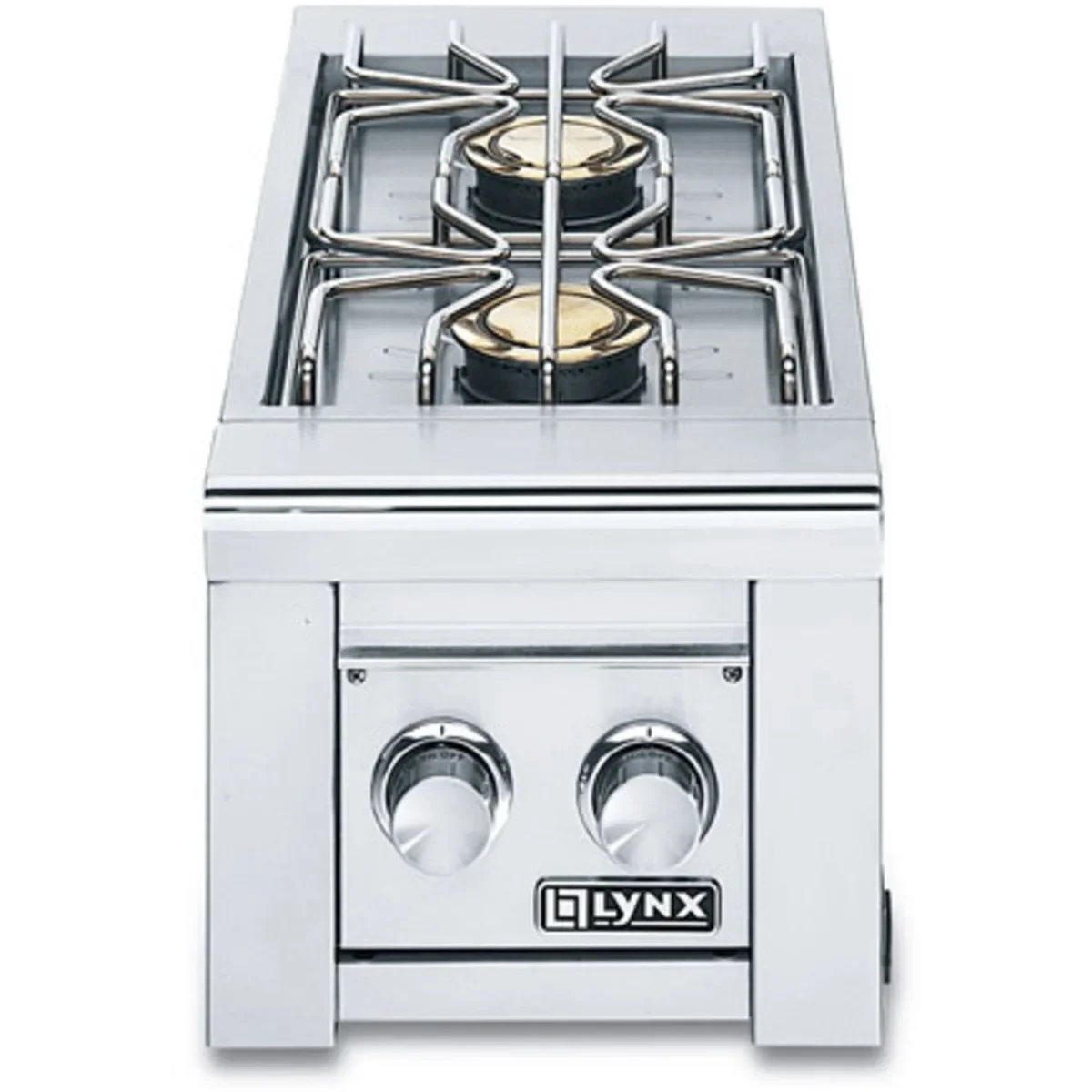
Gas is popular for its instant ignition capability, allowing it to release high heat whenever you are ready to start cooking. This makes it very popular in commercial kitchens where searing and boiling is a round-the-clock necessity. Gas cooktops have a unique advantage over other appliances – as long as you have match to replace the electronic ignition, they can be used in power outage situations.
The main tradeoff is that, because it utilizes an open flame, more ambient heat is released into your kitchen. This can be easily mitigated with a standard range hood unit. In certain circumstances where gas hookups are not available in your area, select brands offer gas cooktops that can be converted to use liquid propane.
Electric Cooktops
For a more eco-friendly alternative to gas, many consumers are opting for electric cooktops in their kitchens. Electric units maintain more consistent heat levels than gas, but require a short pre-heating period to reach higher temperatures. Since there is no flame produced, there is less ambient heat to warm up your kitchen throughout the cooking process. Additionally, their simple electrical hookups make installation quick and easy.
Many have a hot surface indicator included since their surfaces or coils can require a few minutes to cool down. Since your cookware does not rest on grates, it is important to keep it centered over its element to avoid damaging the area around the cooking surface.
Induction Cooktops
Induction cooktops are high-end electric cooktops with some structural differences that make them popular choices for luxury kitchens. Induction utilizes electromagnetism to transfer heat directly into your cookware, speeding up the cooking process and expelling no ambient heat. This makes their smoothtop glass surfaces safe to the touch when in use and allows spills to be wiped up immediately since they do not burn onto them. While they start at a higher price point, the energy savings over their lifespans more than offset the cost of purchase.
The main tradeoff of induction is that it requires conductive, metallic cookware to be used. While the surface itself does not heat up, hot surface indicators are still included. This is because heat conducted by your cookware may release back into your cooking surface, keeping it hot to the touch for a brief period after cookware is removed.
Burner Styles and Surface Options
After choosing a fuel type, you will also have to decide what surface configuration will suit your preferred cooking style. Here are some additional considerations to make whether you are purchasing a gas or electric model.
Gas Burners and Grate Options
- Sealed Burners: These burner types are slightly elevated over the recessed surface of your cooktop, ensuring spills do not fall into them and can be easily wiped away. However, because they have burner caps covering them as well, heat is distributed around the edges of the cap. This creates slightly lower temperatures at the center of your pans while cooking.
- Open Burners: True to their name, these burners provide direct, intense flames to dramatically speed up the cooking process. However, this exposed design makes them prone to crumbs and other items falling into them.
- Continuous Cast Iron Cooking Grates: These durable grates have a rock-solid surface that more evenly distributes heat and resists warping over years of use. Their bridged design lets them support oversized cookware over multiple burners and easily slide heavy pots without lifting them over to a new cooking zone. Many brands design them to be dishwasher-safe so you can avoid tediously scrubbing off burnt-on spills.
- Porcelain Cooking Grates: These grates have a rust-proof, non-stick enamel layer covering their metal cores. They are available in multiple colors (usually black, white, or grey) to match your cooktop surface.
Electric Element and Surface Options
- Radiant Coils: Exposed coils most often found on budget-friendly cooktop models. They will get the job done, but you should expect longer pre-heating times as heat travels through the coils.
- Smoothtop Surfaces: Smoothtop electric models conceal their coils under a glass surface, creating a seamless surface that easily wipes cleans after spillage. While they are crafted durably, take care not to slam heavy cookware onto them, as these impacts risk cracking them.
- Bridge Elements: Select induction cooktops have cooking zones which can share and spread their power over a greater surface area to accommodate oblong, oversized cookware.
Accessories and Upgrades
Sometimes, standard grate shapes are insufficient to prepare specific dishes. Luckily, many cooktop brand offers several accessories and modules that greatly expand the types of meals you are able to make at home.
Optional Accessories
While some cooktops may come prepackaged with certain attachments, select accessories are sold separately due to their niche cooking applications. The most popular available accessories include:
- Griddles: Multipurpose flat top cooking surfaces that often come with a grease catcher. Since they are full depth attachments, they are capable of cooking multiple burgers, pancakes, omelettes and other foods together instead of having a dedicated pan for each.
- French Tops: A large, cast-iron plate that concentrates heat in the center and radiates it outward, creating dedicated cooking zones with one burner. That way, you can slide multiple cookware items to each one’s ideal temperature zone without using multiple burners.
- Wok Grates: These circular grates safely cradle large wok pots for stir fry.
- Grill Attachments: These accessories give you the classic sear marks of a grill without going outside and lighting up your barbecue.
Specialty Modules
Some cooktops either combine cooking surfaces or exist as standalone modules to serve as permanent cooking fixtures in your kitchen. Some popular options include:
- Deep Fryers: Deep fryer modules have sufficient depth to fully submerge foods, allowing you to prepare French fries, fried chicken, and other foodie favorites.
- Teppanyaki Grills: A flat, broad griddle surface originating in Japan that lets you cook bite-sized meats, vegetables, seafood, and even fried rice with theatrical flair for your guests.
Premium Features and Design Elements
Luxury cooktops have numerous features and design elements to help you tailor meal preparation to your personal needs, including:
- Bluetooth hood synchronization from select brands automatically starts and adjusts range hood power based on settings and/or heat detected from the cooktop surface.
- Glowing knobs are both a stylish way for your cooktop to stand out and a safety feature that alerts you when a burner is active.
- Slide controls intuitively respond to your touch, allowing you to easily adjust settings without pinching or twisting knobs.
- Cast brass burners more effectively resist warping compared to standard aluminum burners thanks to their high heat tolerance. They last 2-3 longer than aluminum, can be polished back to bright metal after spills, and provide better flame stability.
- Slimline cooktop modules from the same brand let you mix and match fuel types to create custom cooktop combinations. Mix gas with electric, induction with grilling, and so much more!
- Frameless designs on smoothtop electric cooktops enable seamless, low-profile integration into your countertops.
- Star-shaped burners from brands like Thermador provide greater coverage on the underside of your cookware, release more heat, and eliminate warm spots.
- Triple ring burners allow you to seamlessly transition from gentle simmering to intense searing as outer rings ignite to release more power over a greater area.
- Smart Features and Wi-Fi Connectivity add hands-free functionality to your cooktop, letting you operate it by means of a smartphone app or even your voice.
Smart Cooktops and Wi-Fi Features
Whether it’s your phone to your Bluetooth speaker, your computer to your TV, and now even with appliances, the era of “smart” and “connected” devices is going strong. However, most people are not sure of the difference between smart appliances and connected appliances.
Smart Cooktops
“Smart” refers to intuitive operations initiated by the cooktop unit when certain sensors are triggered. An example of this is GE’s Chef Connect feature which allows select cooktop units to communicate with compatible GE range hoods. When a burner is activated, the range hood’s fan will be automatically activated at comparable ventilation speeds to efficiently extract the heat being released.
Connected Cooktops
“Connected” refers to Wi-Fi compatibility. Connected cooktops can access the internet to download updates, send notifications to your smartphone, allow the manufacturer to perform remote diagnostics, let you operate the cooktop with your voice using a smart home manager, and so much more. One of the most impressive modern examples of this is Bosch cooktops that can sync with the Home Connect™ smartphone app. Using Home Connect™, you can adjust or turn off burners remotely from your phone, making it an essential safety feature for when you are distracted by other household chores or are not at home.